by Anonymous
Over two years ago I was picked up by ICE agents, detained in front of my home, family and kids. Without notice or warning, I was snatched onto a plane with no idea as to the destination until the moment we arrived in Phillisburg, Pennsylvania. From the moment I was picked up and taken into ICE custody, I was thrust into an atmosphere defined by fear, uncertainty, and isolation. I entered detention without any knowledge of what to expect, whether I would see my family again, without any idea of the process that awaited me. My greatest fear was that I would never see my kids and family again. That I left them financially unstable, which would lead to severe economic hardship for them, especially my wife. This uncertainty quickly transformed into depression as I confronted the immense barriers that stood between me and even the possibility of a fair hearing. Though I was granted relief early on, I was still held for over two and a half years.
Being placed on a plane and taken to an ICE facility far away from my family and local resources was very stressful and demoralizing. As time passed, without the ability to communicate with my family or outside resources, I started feeling discouraged, overwhelmed and defeated. ICE’s practice of transferring detainees far from their families and communities creates nearly insurmountable obstacles to legal representation. Nonprofit organizations often cannot assist detainees housed out of state, and private attorneys are difficult to access from within detention. Even for someone like me—who speaks, reads, and writes English—the system is nearly impossible to navigate alone.
I met many people who did not even understand what was happening to them. Many did not understand the process, the system, or that relief was available to them. Many could not find legal assistance, advice or representation. Many also understood that seeking any type of relief meant continued detention, which was unfathomable, as they couldn’t withstand the conditions of confinement. One person, in particular whom I was able to assist, was an individual from Mexico who was seeking Deferral of Removal under the Convention Against Torture. He feared that upon return to Mexico, the cartel would know of his presence and seek him out to be killed.
He and his brother had previously been extorted by the cartel. This cartel member ended up torturing and killing the brother for refusing to continue payment, and threatened that he was next. Due to impunity, police collaboration, and corruption, though the killer was caught with the brothers’ body showing signs of torture in his autobody shop, the killer was only given nine years. He escaped within three years with the help of corrupt guards and was out and about in the same town in the open continuously threatening this man’ s family. The detainee had the police reports, the judges reports, the autopsies, the “killer’s” testimonies, as well as other witnesses, but he did not know how to put all this together into an effective and convincing case on his own. He did not have the guidance to properly put forth his case. He did not speak, read or write English.
I realized time was of the essence for my own case. I had very limited time to gather the evidence, organize it in a presentable way and present it convincingly, as the bars to meet are very high. I had to prove, with evidence pertaining to me, individually, that I was “more likely than not” to be harmed or killed upon my return to my country, and that the government would not, or could not do anything to stop it, or was complicit in it. I had to learn the specifics of what constitutes this type of evidence, while putting it together on my own, gathering my own evidence from within a facility that limits my communication, my legal education and research. I was unable to find legal assistance to support me in this process.
I didn’t give up because my family and kids were suffering from my absence. My mother had to travel twice to my country of origin in an effort to help me gather this evidence. Due to fear of reprisals from the government, people were not very forthcoming in trying to assist in these types of situations. As much as my fight was for me, it was for my family as well, my effort not to leave them without a father and to have the opportunity to be there for them. That’s what gave me the strength to keep on fighting.
I was not always strong, and I would prepare my sons for the worst case scenario…but how do you prepare your kids to go on without you? How do you express that you may not see them again, that you may not be there for them again…ever? It was heart wrenching, shattering, it makes you look at yourself and question whether you were enough, whether you did enough, makes you question everything.
The answer to these questions could break you as well. For me, my solace was that I had done well enough for my boys for them to know how much I loved them, and to still have their support in all this, to hear them tell me, “just hang in there and fight, Dad…”
What ultimately kept me in detention so long, fighting for my freedom, were all the new changes that were being implemented through Executive Orders. This created confusion and conflicting directives that were only being created due to the political atmosphere. Decisions were being made and compelled under political pressure, and were not related to any risk to public safety. Because of this, DHS and ICE fail to follow their own policy and procedures, and create an automated system of unconstitutional, prolonged and indefinite detention.
Given these circumstances, I was fortunate to be able to assist many people in filling out forms; Cancellation of Removal, Special Immigrant Juvenile Status (For young individuals, who were brought at a very young age either by their parents or whom were wards of the courts and their parents did not want them), and Stays of Removal. I even began assisting with filing motions to reopen state cases due to failure of a defendant’s attorney to incorrectly advise him about the potential immigration consequences of pleading guilty, which constitutes ineffective assistance of counsel. I filed several Corum Nobis, and Habeas Petitions for others.
I recall two specific Coram Nobis instances. I filed to have state cases reopened where the cases were not even deportable offences. These individuals had not been counseled as to the consequences or immigration repercussions of guilty pleas, and they were being pressured by their state appointed lawyers to take pleas which were not in their best interest. Fortunately in both instances I was able to reopen their cases and get them further investigated.
Learning to navigate the bureaucracy and the myriad of departments in the U.S. immigration system is dizzying. DHS handles most immigration enforcement and oversees U.S.C.I.S. (United States Citizen and Immigration Services) which processes immigration applications. I.C.E. is immigration enforcement along with C.B.P. (Customs and Border Patrol). You also have the Department of Justice (DOJ), which is separate from ICE but runs the immigration courts through the Executive Office of Immigration Review (EOIR) and the Board of Immigration Review (BIA) who handles immigration appeals.
One has to know who to reach out to and where to properly file different documents as these departments will not forward documents to other departments. Some documents are time sensitive and need to be filed and proof of filings presented at court. Failure to do so may result in your case being thrown out and dismissed. I have seen this happen very often.
Although immigration detention is legally civil—not criminal—my experience was indistinguishable from punitive incarceration. ICE’s own Performance Based National Detention Standards (PBNDS) are routinely ignored. Oversight bodies themselves have acknowledged that “facilities overall compliance… has trended down” and that corrective actions “do not appear to prevent recurrence of deficiencies”.¹ Yet nothing changes.
I was moved across four states to four different facilities and though some may be different and are operated by different private contractors, the underlying conditions are the same. These are all for-profit companies, cutting corners in every area to make more profit. The conditions I endured were degrading and dangerous. At one facility I was housed in a two tier (2 floors), maximum security unit that houses 48 rooms, that hold 2 detainees per room. We were locked down 18 hours a day. We had no privacy, and a toilet that only allowed us to flush three times per hour, forcing us to sit with feces and or urine for an entire hour. This is not merely uncomfortable—it is unsanitary, humiliating, and a violation of basic human dignity.
Sleep deprivation was constant and similar throughout the various facilities I experienced. Lights stay on all night and guards intentionally walk through units with loud radios. Food was inadequate, communication with family was prohibitively expensive, and commissary prices were exorbitant. These conditions served no legitimate government purpose; they were excessive, arbitrary, and punitive.
I was actually preparing and filing a lawsuit for the conditions at this facility because they were not allowing me to receive a newspaper subscription which my sons had purchased for me. I was then transferred to another state and the issue became moot. These are some of the effects that being moved from center to center have on pending litigation.
Let me underscore that getting moved and/or transferred is a very stressful ordeal. It occurs without notice to you or your legal representatives, disrupting your case and increasing your vulnerability. You cannot take any of your personal belongings, only legal paperwork, therefore you lose whatever commissary you might have purchased. Whatever funds you have on the tablets or phone accounts is lost as well and they will not refund those funds to you. It is a very predatory system that takes advantage of individuals’ circumstances, their lack of knowledge and operates under the assumption that nobody will claim or make a fuss about that money being stolen given their situation.
And they are mostly right. Additionally there is no way for you personally to notify your loved ones that you are being moved, as they usually do this in the middle of night, and they cut off your phone account so that you are not able to communicate. What I would do is to confide in someone, give them my family’s phone number and ask that they call themselves or send a message with their loved ones that I had been moved and would contact them when possible.
When I was transferred from one state, I personally lost about a hundred dollars worth of commissary. I was subsequently transferred from another facility where I also lost about two hundred dollars in commissary along with funds in my communications account. And let me tell you, these commissary stores price gouge everything. They even sell individual items that specifically state on the wrappers they are not meant for individual sale. Though I asked about these funds, they tell you that you forfeit those funds upon transfer. They basically just take your money. I’m sure it amounts to millions nationally.
When you are transferred, any filings that you have done, have to be refiled in the new jurisdiction you end up in, which delays your day in court. Other filings you may have done need to be updated with your new address as mail is not forwarded from any of these facilities. It is upon you to make sure that your address is updated to all of the different segments of the bureaucracy you may be involved with. Many individuals are not aware of this. There are people who lose their case because they do not file paperwork on time, which they were not even aware they had to file because they did not receive the notice. The in-house mail rooms are unorganized and you receive mail two to three weeks late. Your communication with the outside world is disrupted when you have to make new accounts to communicate with loved ones and refund the account at their exorbitant, outrageous prices, which these companies monopolize.
I was being relocated, facing my fourth transfer. Being placed on a plane without knowing where you are going or where you will end up heightens your sense of urgency. My mind would start racing as I wondered if my rights would be thwarted and if I would be illegally deported without due process. In time I came to learn to be wary of these types of thoughts which made it very difficult to prioritize my reactions. By that I mean, deciding whether or not to cooperate with officials or refuse, and stand up to demand that your rights be respected. It becomes a very tense situation.
This time I was unable to decipher if the situation was legit or some sort of ruse, as happened to me several times. This time, staff told me I was being transferred to a different facility, only to realize I was being taken to the Mexican border in their effort to sidestep my due process rights and illegally deport me to Mexico. This was very common in Texas. Every week many people were duped this way. Some would refuse and tell the Mexican authorities that they were being sent there against their will and come back. Others unfortunately did not realize what was happening to them or that they had the right to refuse, until it was too late.
I personally knew some Cubans that were taken to the border this way. They refused to get out of the van and expressed their unwillingness to go to Mexico to the Mexican officials, who won’t accept those not willing to go. They were subsequently beaten up by ICE officials.
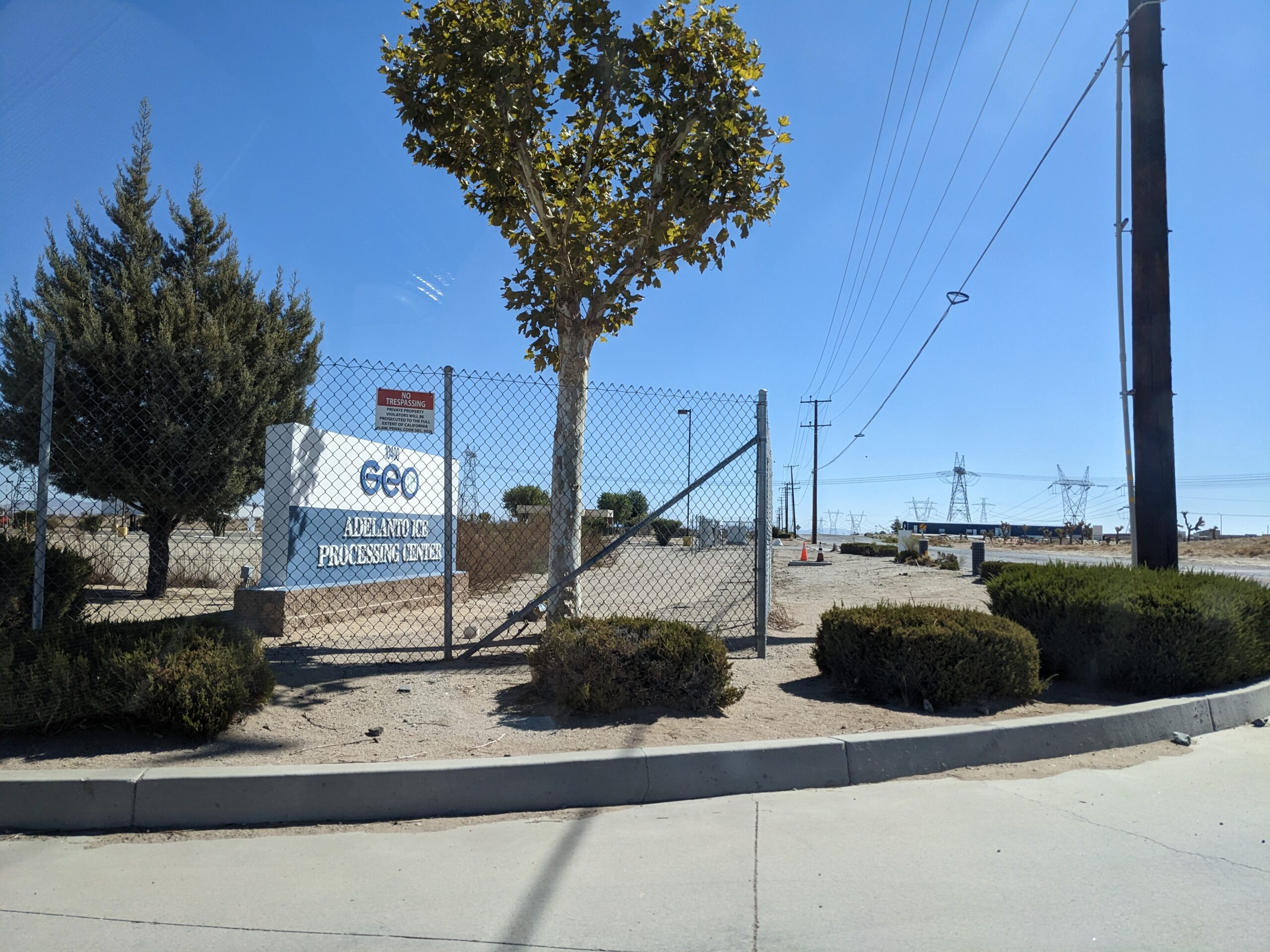
Transferred 2,200 Hundred Miles to the Middle of the Country
Arriving at this facility was unlike any other facility I had previously been through. The amount of people, the packed atmosphere, all of us were chained and shackled from our hands, waist and feet. It was unlike anything I had previously experienced. We all knew that this was a brand new facility and nobody knew what to expect. I arrived with 200 other detainees, and witnessed another 1,000 detainees being processed before us in similar conditions. It was chaos.
It reminded me of those scenes in movies where slaves are being brought to market to be sold off or traded. Several individuals had deep cuff marks both on their hands and feet from how tight they had been placed. Even when they complained about the tightness and numbness from their limbs, staff ignored their pleas.
We witnessed how most of the staff were basically being trained on the job. Most had no idea what they were doing and it was evident. It took us two days to get processed, which means we spent those days in holding cells, in crowded rooms, with barely any room to sit, noisy, smelly… Once processed, we quickly realized how ill prepared they were. There were no phones, no tablets, no paper, no envelopes, no writing utensils, no way to communicate with the outside, our families, our lawyers, nobody. We were completely blocked off from the world.
Medical personnel were not ready or prepared, procedures were not being followed to ascertain our medical safety. We were not being properly checked, we were not receiving our medication, and there was no order or proper procedures established. The staff didn’t even know where everyone was at any given time. We had many elderly persons who required their diabetic medication or high blood pressure medicine, we had many who were not receiving their psych medication. When someone was suffering a diabetic attack, all the detainees had to scream in order to get the staff’s attention for that person to receive emergency medical care. In this center, I was exposed to tuberculosis, measles and hepatitis.
I had a Cuban cellmate who had lived in the United States for over sixty years. He was a retired grandfather whose biggest concern was getting back to his grandchild. He suffered from several debilitating chronic medical conditions: lung cancer, prostate cancer, hypertension, COPD, gastroesophageal reflux disease, neck pain due to lumbar surgery, abdominal pain due to another recent surgery. He suffered from pulmonary embolism, first degree hemorrhoids, thoracic back pain, osteoarthritis of lumbar spine and cervical stenosis of spinal canal, peptic ulcer disease, and pre-diabetic. He was constantly told by the nurses that he should not be at this facility because they did not have the required medical personnel or proper equipment to care for him. He was eventually transferred to a Texas facility, where conditions were even worse.
This was supposed to be a holding facility within a tent environment where the most a detainee was supposed to be housed was approximately ten days. I ended up being there for seven months, which became the average stay for most detainees. We were held in tents divided from others by ten foot walls. The atmosphere was filthy, the staff would not clean up, or provide us with the tools to clean for ourselves. We were not able to purchase commissary, yet they did not provide for our most basic necessities. No soap, no shampoo, no toilet paper, no razors, no toothbrushes, no toothpaste.
When supplies did arrive, it would be chaos. It was first come first serve until they ran out. This created an atmosphere ladened with hostility, pitting us against each other for our most basic needs. No one was being taken to their court appointments. Lawyers were not allowed to call or visit. We couldn’t write to them to let them know our circumstances or that we had been transferred here.
I personally made an effort to write grievances about our conditions to document the neglect and blatant violations that we were experiencing. I wanted to leave evidence of the actualities that were happening there and of all the violations of civil and human rights that were occurring. I still believe and hope that someday my testimony will become evidence upon an investigation.
One loses track of days, it becomes an abyss, a whirlwind of inhumanity and despair. Prolonged isolation, and separation from my family intensified everything. There were times when I would just cry, sometimes out of the blue, as if the emotions I was suppressing were still being subconsciously processed, and tears would just surface. In those moments I would just go shower. The system is designed in a way that compounds trauma rather than alleviating it.
There were individuals attempting to commit suicide though, because they were drained emotionally, while not receiving their medication, which escalated their PTSD. People would bang on the door constantly to get the attention of supervisors, even though that would not change anything. Their response was violence. The “Special Response Team” would be summoned. SRT would come and start spraying us with pepper spray, pushing and grabbing people, submitting them to illegal headlocks, choking people. Their response was always violence. There were many individuals who suffered severe mental illnesses that were mixed in with us, and they were not receiving any mental health assistance or support.
An individual who was transferred together with me, ended up being killed by strangulation for demanding his medication. Many detainees witnessed the guards choke him as he pleaded for his life and screamed that he could not breath, that he had asthma, but they didn’t stop choking him until they killed him. They tried to cover it up alleging that he attempted suicide, but many witnesses contacted this persons family and gave them accounts of what actually happened. ICE tried not to have an autopsy, yet given everything they were hearing, the family demanded one. Upon further investigation, the authorities who initially designated it a suicide were forced to admit that it was a homicide given the autopsy reports.
I witnessed stabbings, beatings, blunt force trauma. The guards used force and threats of solitary confinement as tools of control. I was pepper sprayed several times, for no particular reason, as a show of force. I was tackled to the ground, and handcuffed with several officers on top of me. I lived through a race riot, which was instigated by the guards, where multiple people were stabbed.
Beyond the physical and psychological harm, detention devastated my family. My children were deprived of their father, and my family bore the emotional and financial burden of my absence. My youngest son, I believe was the most affected throughout all of this as me and him were very close. I would be the one to do homework with him. We would go hiking and paintball, or play basketball whether at home or at the park. I missed his elementary graduation. He would tell me how much he wanted to go hiking, or play basketball, but nobody would take him. His only outlet was playing online. It would break my heart to hear my son that way, and not be able to say when I would be back to do that with him.
I fought for my life by immersing myself in legal research and assisting others. I wrote letters to every organization I could find, spent hours calling pro bono attorneys, and represented myself pro se while searching for evidence and expert support. I began writing letters to every immigration organization… anybody and everybody. Ultimately, one of those letters reached someone who cared—a professor who connected me with attorneys who changed the course of my case. Their compassion inspired me to help others in detention who lacked English proficiency or understanding of the legal system.
My experience in ICE detention reveals a system that is punitive, arbitrary, and deeply harmful. The conditions I endured violated constitutional protections, federal standards, and basic principles of human dignity. Ultimately, the way these detention centers are being funded, with contracts handed out to anonymous LLC’s that are set up within weeks of winning federal contract bids is human trafficking.
¹Office of Detention Oversight (ODO), during Compliance Inspection at BFDF, (2024-0001-219, October 24-26-2023), found 14 Deficiencies in 7 Standards. The Report acknowledges that the “facilities overall compliance with ICE PBNDS 2011 (Revised 2016) has trended down” and that “even the corrective actions identified in the uniform corrective plan (UCAP) does not appear to prevent recurrence of those deficiencies.”