What it means to be a Christian and a Citizen
By Alejandra Romo
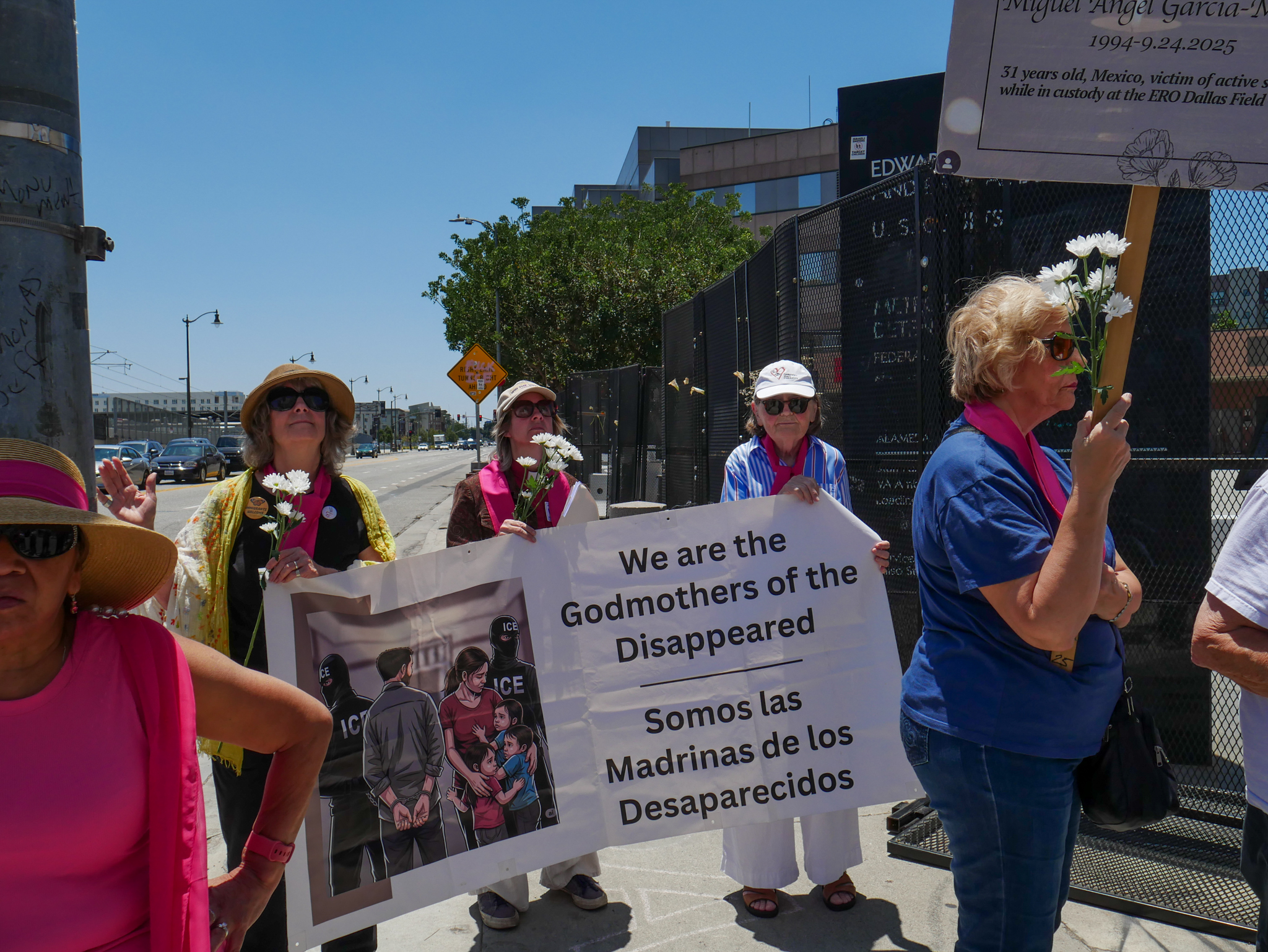
Mary’s involvement with CLUE began through the organization’s Tuesday prayer vigils outside the federal building in downtown Los Angeles. Each week, clergy, faith leaders, and community members gather to pray alongside families navigating the immigration system and to offer support to those impacted by detention. Through those vigils, Mary saw some of the fear and uncertainty many families experience when a loved one is taken into the immigration system.
Eventually, she learned that CLUE needed volunteers to help post immigration bonds. She decided to volunteer.
When it came to volunteering with CLUE’s Immigration Bond Fund, she never imagined that what seemed like a simple task would transform the way she understood community and the power of showing up for others.
At the time, her role seemed straightforward. Once CLUE raised the funds, she would take a check along with the proper paperwork to the federal building and post the bond in person. It was usually a simple process that came with several hours of waiting. While tiresome, she knew that each completed bond meant someone would be reunited with their family, often the very next day.
“All I’m doing is passing along the paperwork and the check,” she said. “But it means that somebody’s life is going to change.”
As someone born and raised in the United States to white parents, Mary had never personally experienced the immigration system. Looking back, however, she realizes that long before she ever carried a bond check, three experiences involving people close to her gradually transformed immigration from an issue she understood from a distance into something deeply personal.
The first came while supervising a young college student who volunteered at the organization where Mary worked. She came to know the student as incredibly bright, hardworking, and eager to contribute. The student, who was undocumented, approached every opportunity with enthusiasm and determination. Yet despite her talent and commitment, her immigration status constantly stood in the way of opportunities many of her peers took for granted. It was upsetting to watch someone with so much potential repeatedly encounter barriers that had nothing to do with her abilities or work ethic. There was so much she could offer, but she was forced to suffer the conditions of being,
“A student who was not allowed to work. In the process of getting her degree and becoming a contributing member of society, these roadblocks were being put in her way.”
The second experience involved a family friend’s gardener, a father of four, who was detained by ICE and taken to the Adelanto Detention Center. Mary had met him and his youngest son, who has a disability, through the years he spent doing gardening work for her close friend. After his detention, she stayed in touch with his wife as she tried to hold everything together. The wife was suddenly raising four children while working two jobs, trying to keep food on the table and maintain stability in her husband’s absence. Watching the family struggle showed Mary just how far the effects of detention reach beyond the person who is detained.
“She’s trying to figure it out one day at a time. It’s pretty awful. And you know, I’m very blessed. I’m incredibly blessed. So I have a responsibility to folks like this other woman and this other gentleman and his family to understand what it means not only to be Christian but to be a citizen of this country.”
The third experience unfolded while she attended one of CLUE’s Tuesday vigil.
As the group walked and prayed near the federal building, they came across a woman standing outside with three children under the age of three, strollers and all, visibly shaken. She and her husband had gone in for what they believed would be a routine immigration appointment, when he was taken into a back room and detained on the spot. She was left standing outside alone with her babies and toddler, desperately trying to reach their attorney by phone.
“There it was, right before us,” Mary said. “The purpose of why we were there.”
Those experiences gave new meaning to the work Mary was doing through CLUE’s Immigration Bond Fund. Every time she carried another bond check into the federal building, she knew there was a family waiting on the other side.
Over the years, Mary has helped post bonds ranging from $1,000 to $15,000, with $5,000 being fairly typical. To some, those numbers might not mean much. However, for a family already stretched thin by the financial burdens that arise when a loved one is detained, they can be entirely out of reach, standing as the final wall keeping families apart.
Without help, that can mean months of additional detention and less autonomy to continue fighting an immigration case. Not because someone poses a threat, but because they simply do not have the money.
That is the gap the Bond Fund exists to close.
A posted bond means physical safety, a reunited family, and the ability to return to the little things most of us have been fortunate enough to never know what it feels like to be kept from: going to work, attending school, seeing a doctor, sleeping in a warm bed, wearing clean clothes, or sharing a meal at home with loved ones.
Mary’s commitment to helping others was shaped long before she became involved with CLUE. Growing up, her parents never treated helping others as an extraordinary act. It was simply understood that people should continuously do small acts of kindness for one another. That lesson stayed with Mary throughout her life and became central to how she understood both her faith and her responsibility to her community.
When asked what she’d say to someone considering volunteering or donating, Mary didn’t hesitate.
“Do it. Take the time and just do it.”
For Mary, the work comes back to something simple: recognizing another person’s humanity and being willing to act on it. A single bond payment cannot undo the hardship a family has endured, but it can restore a sense of freedom, safety, and dignity. It reminds someone that they matter.
Reflecting on her experience, Mary shared “Here we are in the United States of America with all of our privileges, with all of our freedoms, and we make it difficult for people. I recognize more fully the fact that my relatives were immigrants, as is the case for anybody who is not Indigenous. We talk about people being immigrants, and we forget very easily that we all are here because of our relationships with immigrants.”
If you would like to get involved in any of the programs mentioned in the story:
Godmothers of the Disappeared Vigil: Every Tuesday at the Los Angeles Federal Building at 12pm