
One Woman’s Lifetime of Faith, Family, and Lived Experience
By Alejandra Romo
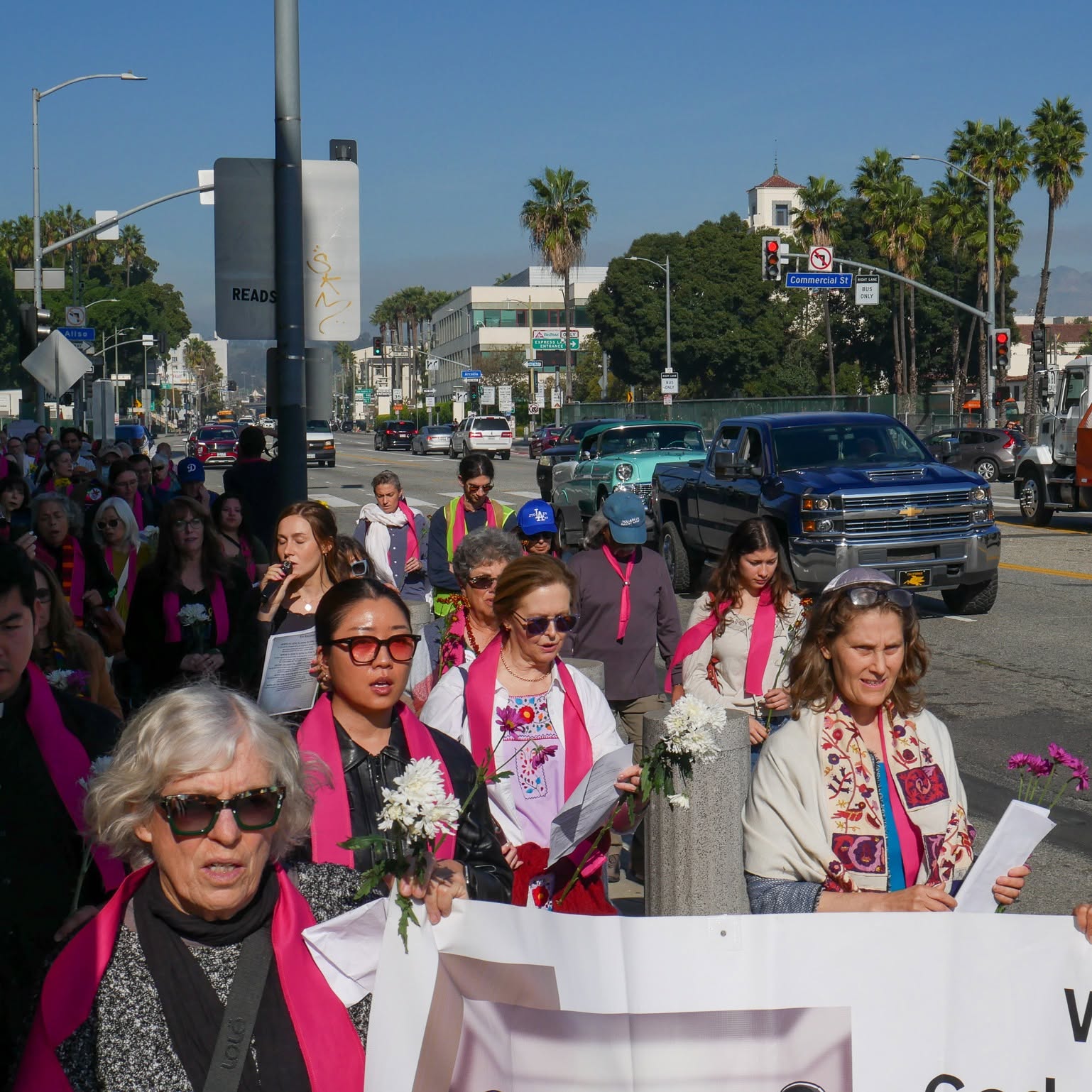
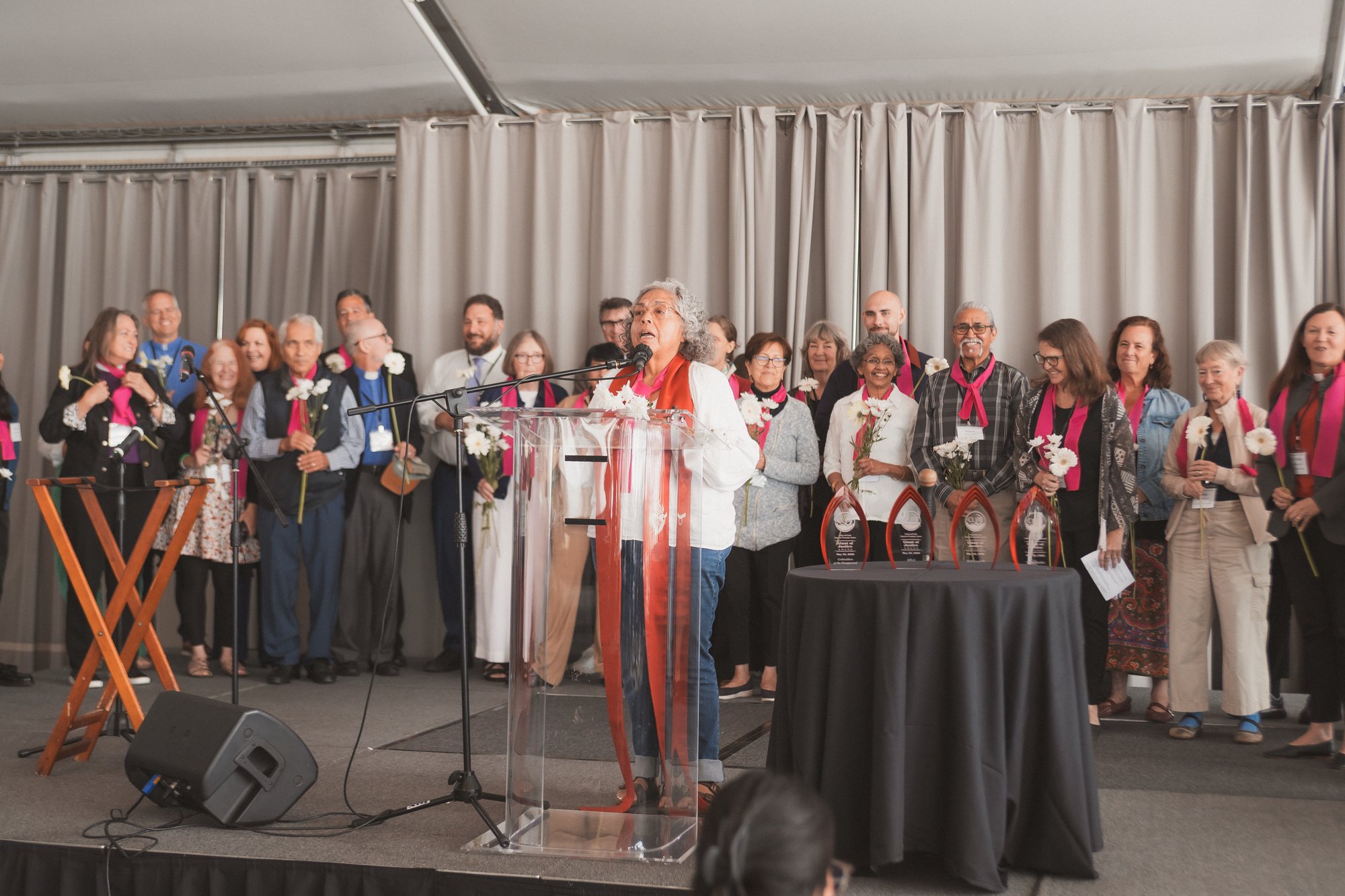
Every Tuesday afternoon, people begin gathering outside the federal building in Downtown Los Angeles wearing pink bandanas. Some people have been coming every week for months, others arrive for the first time, drawn by a desire to stand alongside immigrant families navigating some of the most difficult moments of their lives.
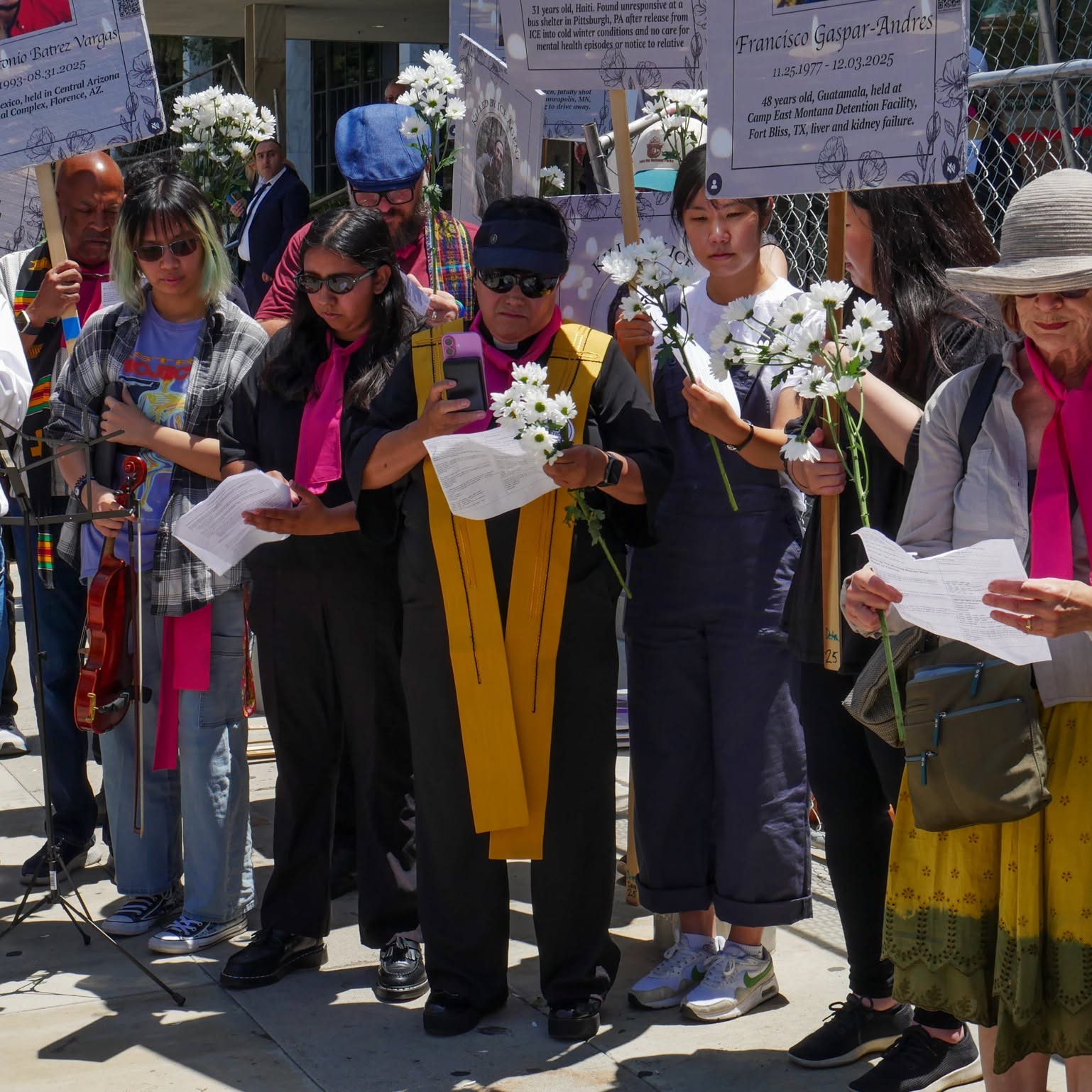
At noon, once it’s time to start, the group forms a circle for acknowledgements then begins to walk to the Metropolitan Detention Center just around the corner where hundreds of people remain separated from their families, not knowing what will happen next.
The group is called the Godmothers of the Disappeared.
They gather to bear witness to the human cost of immigration detention. They sing songs and offer prayers for those inside the detention center, for the families waiting anxiously outside, and even for the officers who work within the system. They carry white flowers as symbols of peace, resistance, and remembrance. The group has now marked over a year of constantly showing up for this purpose, week after week.
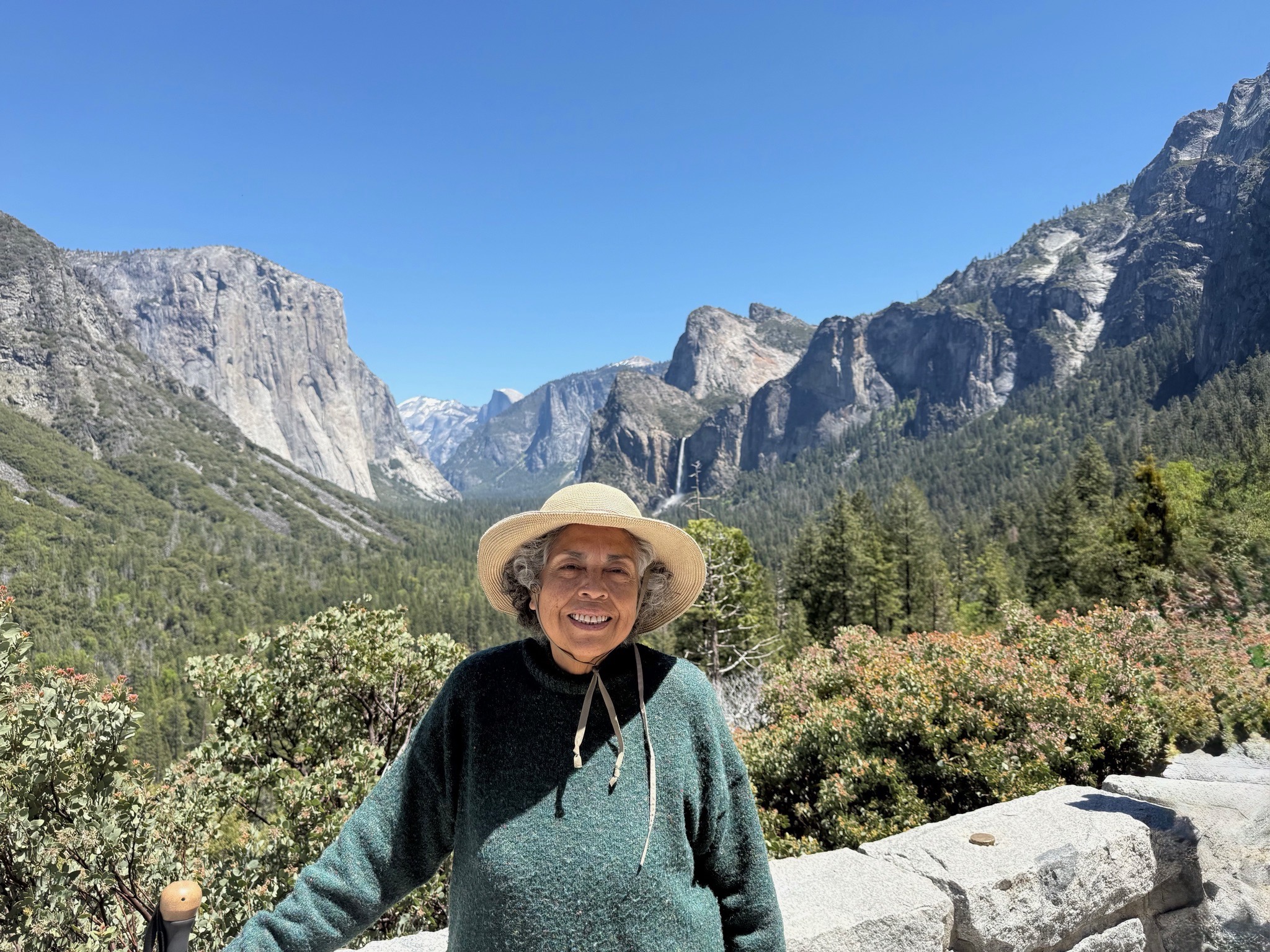
Pastor Rosa Manriquez had the initial idea of creating the Godmothers, a vision that was built over a lifetime.
She grew up in Boyle Heights, where immigration was woven into everyday life. Her grandparents had immigrated to the United States carrying little more than hope for a better future, and like countless immigrant families, they endured poverty, discrimination, and sacrifice so that future generations might have opportunities they never did.
These stories shaped Rosa’s understanding of community from an early age.
She speaks about her grandparents with deep admiration, not simply because of what they survived, but because of who they were willing to sacrifice for. They worked tirelessly for their children and the future grandchildren they could only imagine. Everything Rosa has today, she says, exists because someone before her chose to endure hardship instead of giving up.
One story from the generation before Rosa has remained in her family’s memory. As she tells it, a relative who was sixteen years old at the time, Robert, became the target of immigration authorities while visiting Rosa’s grandmother in Los Angeles. After learning that immigration officers were on their way to arrest him, the family quickly warned Robert, gave him money for a train ticket, and sent him back to Tijuana before authorities arrived. When the officers searched the home and realized he was gone, they ransacked the place, smashing dishes, tearing through cabinets, and destroying furniture.
Frustrated that they had missed him, they then turned their attention to a ten-year-old boy, who would become Rosa’s uncle in the future. They beat him in front of his mother while demanding to know where Robert had gone, not accepting the truth that he had left the country already. Stories like this became part of Rosa’s family’s history, passed from one generation to the next. Long before she experienced the immigration system herself, these accounts taught her that encounters with immigration authorities could leave lasting wounds, not only for the people they went after, but for entire families.
Decades later, Rosa would experience the immigration system firsthand while trying to help her husband become a lawful permanent resident. After arriving initially on a temporary visa, Rosa petitioned on his behalf, beginning what would become a years-long process filled with paperwork, appointments, and uncertainty. Eventually, they believed they had reached the final step. Her husband was required to return to Ciudad Juárez, the port of entry through which he had originally entered the United States, for what they expected would be his last immigration interview. Rosa waited outside the U.S. Consulate, convinced they were finally at the end of a four-year journey, however, this was not the case.
During the interview, the immigration officer asked to see the visa her husband had used to enter the country. After examining it, the officer took out a pair of scissors and cut it into pieces. He then informed him that the fingerprint records submitted years earlier were no longer valid because the government’s requirements had changed during the course of the application process. He would have to begin that portion of the process again. Confused, her husband asked how he was supposed to return to the United States to complete the new requirements, when the officer had just destroyed the visa that allowed him to cross the border. The response was: “That’s your problem.”
For Rosa, that moment crystallized everything she had come to believe about the immigration system. It was not the straight line that many people imagine, where following the rules inevitably leads to success. It felt more like a game of Chutes and Ladders where chance played the largest role. After four years of carefully completing every requirement, one unexpected change in policy and one officer in a foul mood sent them back to the beginning. Instead of returning home together, Rosa crossed the border alone, leaving her husband behind to navigate a process that suddenly had no clear end in sight. Those experiences left her with a profound understanding of the fear immigrant families carry long before they ever encounter detention.
Running alongside those experiences, Rosa heard a spiritual calling. As a young girl attending Catholic school, she had dreamed of becoming a priest. She remembers pretending to celebrate Mass before she was old enough to understand what priesthood fully meant.
While boys became altar servers, Rosa quietly memorized the prayers from the pews and sang in the choir, captivated by services. But the institutional Catholic Church would never open the door to priesthood for her. Still, the calling never faded.
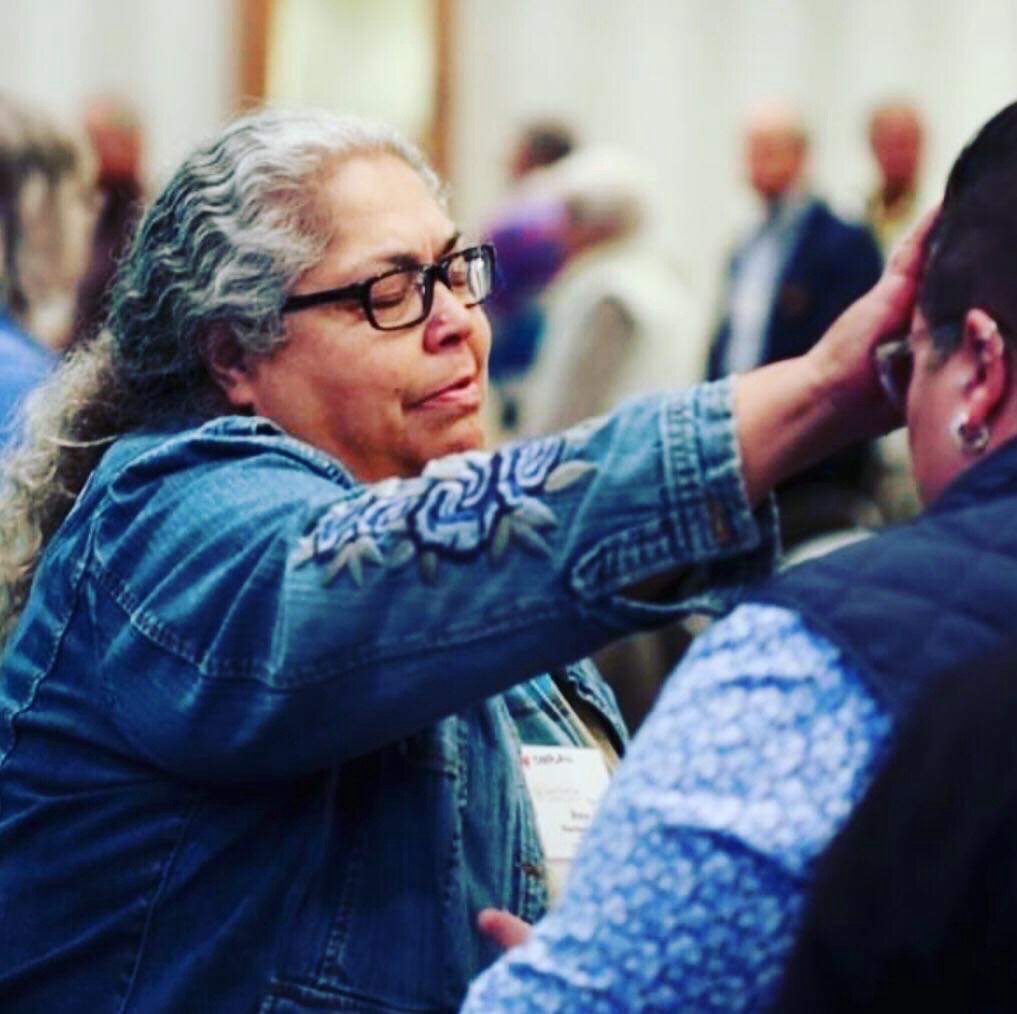
Eventually Rosa was ordained through the Roman Catholic Women Priests Movement, embracing a ministry rooted less in titles, than in accompaniment. She believes faith is not confined to church buildings but is lived wherever people are hurting. That understanding would eventually become central to everything she does with immigrant communities.
At the beginning of the current presidential administration, while immigration raids intensified across Los Angeles, CLUE led discussions on how congregations could respond. The organizers talked about legal clinics, “Know Your Rights” trainings, and distributed red cards so that families would understand their constitutional protections if Immigration and Customs Enforcement officers appeared at their homes. Rosa believed all of those efforts were necessary, however, she felt something more could also be done. Very few people were publicly acknowledging those who had already disappeared into detention. Her mind drifted to Argentina’s Mothers of the Plaza de Mayo, whose public witness refused to let their children who disappeared during the military dictatorship be forgotten.
Rosa thought to herself, what if Los Angeles had something like that? What if there was a public reminder that the people inside detention centers still belonged to families, communities, and neighborhoods waiting for them to come home? While a bit intimidated with the thought at first, she reflected, “If I don’t do this, I’m not honoring the memory of my grandparents.” Once Rosa shared the idea with others, it resonated.
The initial inspiration may have come from Rosa, but bringing that vision to life required an entire community. Faith leaders, organizers, neighbors came together to ask questions and plan it out. What should these gatherings look like? How could they center the people in detention rather than themselves? How could they welcome people of different faith traditions while remaining grounded in prayer? Week after week, those conversations slowly evolved into what now takes place every Tuesday afternoon.
The vigil is much more than the simplicity it seems on paper. Week after week it is always a different experience filled with moments that rarely appear in headlines but are beyond significant and impactful. These moments are also why the Godmothers keep returning. For Rosa, this is what the Godmothers have always been about: preserving human connection in a system that often isolates people at the very moment they need community the most.
Every prayer offered outside those walls carries the same quiet promise:
You are still seen.
You are still loved.
And someone will continue showing up for you.
If you would like to get involved in any of the programs mentioned in the story:
Godmothers of the Disappeared Vigil: Every Tuesday at the Los Angeles Federal Building at 12pm